Five Positive Indicators vs One Small Negative
Much of the narrative around March’s data has focused on Halifax reporting a 0.5% monthly dip in house prices.
However, this represents just one short-term indicator – and Nationwide’s measurement swung the other way with a growth figure of 0.9%.
Across the wider dataset, the picture is notably positive. Annual growth has increased, transaction levels have improved, mortgage approvals have edged higher, supply is increasing, and regional growth remains strong.
When five of six core indicators are trending upwards, a single negative reading becomes far less significant.
Understanding the Mixed Signals
Higher-value transactions in the South East and London, where prices exceed £383,000 and £536,000 respectively, can skew short-term data. Meanwhile, more affordable regions such as the North East, with average prices around £184,000, continue to show stronger growth.
When viewed together, the datasets reinforce a consistent message of market stability.
Regional Differences Continue to Drive Opportunity
And the not-so hidden gem in the regional picture? You guessed it, the North.
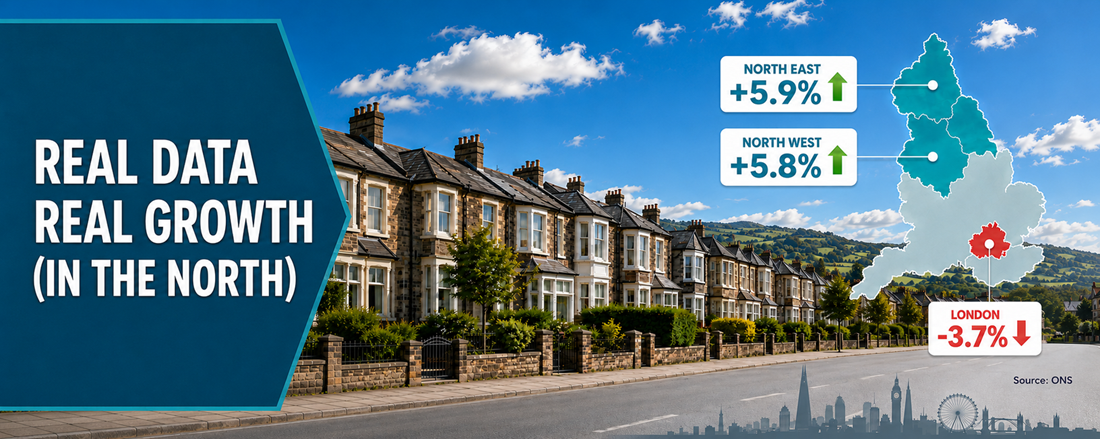
The North East has recorded a 5% annual growth (6 times the national average), while the North West has seen a 3.1% increase. In contrast, the South East has declined by 1.9%, with London down 1.2%. (Halifax).
This regional variation highlights how affordability is driving growth, with northern regions continuing to offer strong investment fundamentals. As Find UK Property clients know only too well – these are the regions where we’ve operated for over 18 years, to achieve the best returns for them and their families.
What This Means for Investors
Despite geopolitical tensions, inflation concerns, and mortgage rate pressures, there has been no sharp correction or widespread decline. Growth is happening, but in a controlled way. Competition has eased a little, but demand remains.
For investors, this reduces the risk of overpaying while maintaining confidence in long-term performance. Rental demand continues to outpace supply in many regions, supporting strong income potential.
Dr T’s Property Insight
“Even with global uncertainty and higher borrowing costs, the UK property market hasn’t changed. Supply and demand are thenly market forces for a reason forces tells you everything you need to know about the strength of the fundamentals.”
Looking Ahead
With annual growth at 2.2%, transactions rising by 5.6%, and approvals increasing by 3.9%, the direction of travel is clear.
Even if short-term fluctuations continue, the underlying trend remains positive.
Final Thoughts
Don’t believe the hype and lazy narratives – March’s data does not tell a story of decline. It tells a story of resilience backed by evidence.
One indicator may have dipped, but five others are moving forward. Growth is returning, activity is improving, and the market is holding firm under pressure. When paper investments and financial markets feel like roulette – don’t bet against the house(s).