The Affordability Problem Is Keeping Buyers Out of the Market
For many first-time buyers, home ownership has become increasingly difficult.
Over the past two decades, house prices have risen far faster than wages. Although mortgage rates have eased from their recent peaks, borrowing costs remain significantly higher than the ultra-low interest rate environment that many buyers enjoyed during the 2010s.
The result is a growing affordability gap.
Prospective homeowners require larger deposits, face stricter affordability assessments, and must commit to higher monthly repayments. Many simply cannot meet the requirements needed to secure a mortgage.
As a consequence, people are spending longer in rented accommodation before purchasing a home, while some are postponing ownership altogether.
This creates sustained demand within the private rented sector.
Housebuilding Alone Is Unlikely to Solve the Problem
Government policy continues to focus heavily on increasing housing supply through new development.
While additional housing is undoubtedly needed, there are significant barriers preventing the rapid delivery of genuinely affordable homes.
Developers continue to face:
- High construction costs
- Expensive land values
- Planning delays
- Labour shortages
- Increasing regulatory requirements
- Rising financing costs
Building homes is becoming more expensive, not less.
Many affordable housing projects require substantial subsidies or cross-financing from higher-value developments to remain commercially viable. Without strong financial incentives, developers simply cannot build at the scale required to close the housing gap.
This means the affordability challenge is unlikely to disappear anytime soon.
The Rental Market Faces a Different Crisis
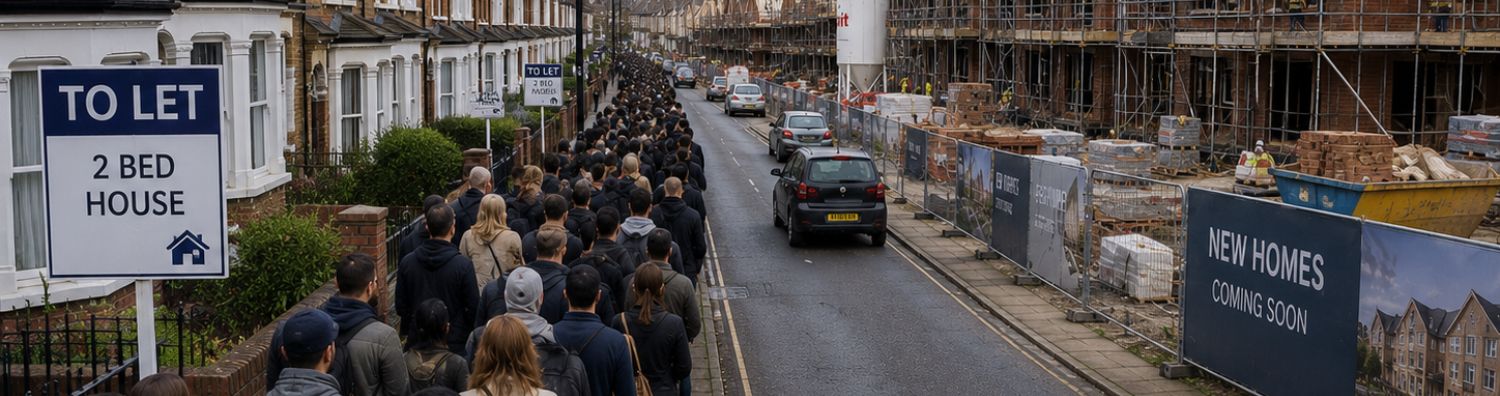
While affordability dominates discussions around home ownership, renters face an entirely different problem.
The issue is availability.
Demand for rental accommodation continues to grow as more people remain in the rental sector for longer. At the same time, many landlords have been leaving the market due to increasing costs and regulatory pressures.
Higher mortgage rates, changes to taxation, compliance requirements, energy efficiency expectations and legislative reforms have all increased the complexity of being an active landlord.
The result is a reduction in available rental stock. According to the lender Pepper Money, 220,000 rental properties have been removed from the market in the last 12 months.
(https://www.thisismoney.co.uk/money/buytolet/article-15731715/Landlord-exodus-220-000-rental-properties-disappear-year-Renters-Rights-Act-arrives.html)
When demand rises and supply falls, rents inevitably increase.
This is exactly what many parts of the UK are currently experiencing.
Why Rental Demand Is Likely to Remain Strong
Several long-term trends suggest rental demand will continue to grow.
Firstly, affordability barriers are preventing many people from transitioning into home ownership.
Secondly, younger generations increasingly value flexibility and mobility, making renting an attractive lifestyle choice.
Thirdly, improvements to tenant protections are making renting a more secure and appealing option for many households.
Combined, these factors create a powerful foundation for continued rental demand across much of the UK.
What This Means for Property Investors
For investors, the current housing environment presents both challenges and opportunities.
The challenge lies in navigating an increasingly regulated market.
The opportunity lies in recognising that the fundamental supply and demand imbalance remains firmly in place.
A shortage of housing stock, combined with growing rental demand, supports long-term rental income and provides a strong foundation for capital growth over time.
This is particularly true in regions where affordability remains stronger and rental yields continue to outperform national averages.
Dr. T’s View
“The housing crisis is often discussed as a single issue, but in reality it’s two separate problems. Affordability for buyers and availability for renters. While solving affordability will take many years, rental demand is likely to remain exceptionally strong because supply simply isn’t keeping pace. Investors who focus on quality housing in the right locations are well positioned to benefit from these long-term market fundamentals.”
Dr. T, Founder of Find UK Property
Why This Is Good News for Find UK Property Clients
Many investors recognise the long-term opportunity in residential property but are increasingly concerned about the responsibilities that come with being a landlord.
This is where the Find UK Property model provides a significant advantage.
Our clients invest in carefully selected properties in strong-performing regional markets while benefiting from a fully managed, hands-off approach.
Rather than dealing with tenants, maintenance issues, compliance requirements and day-to-day management, investors can focus on the performance of their asset while experienced operators handle the operational side of the property.
As rental demand continues to grow and housing supply remains constrained, this approach allows investors to benefit from the fundamentals driving the market without taking on the burden of active property management.
Looking Ahead
The UK’s housing challenges are unlikely to be resolved quickly.
Housebuilding remains below the level required to meet demand, affordability pressures continue to affect buyers, and rental supply remains under strain.
While these conditions present difficulties for many households, they also reinforce the long-term investment case for residential property.
For investors focused on stable income, strong demand and long-term growth potential, the fundamentals remain firmly in place.
The housing crisis may be a challenge for policymakers, but it continues to highlight the importance of professionally managed rental accommodation and the opportunities available to well-positioned property investors.