
Investment Property in the UK
The complete property investor guide
How rental income, capital growth, costs and risk work, with a clear framework for comparing UK investment property.

An investment property is bought primarily to generate rental income, capital growth, or both, rather than to serve as the owner’s main residence. Performance depends on the purchase price, tenant demand, running costs, financing, ownership structure and eventual resale market.
Key takeaways
- An investment property is bought to produce rental income, capital growth, or both, rather than to be the owner's main home.
- UK average prices rose from £9,555 in 1976 to £270,264 in 2026, a 28.3× increase and 6.91% annual compound growth, with a median 12 years to double.
- Gross yield = annual rent ÷ property value × 100. Net yield deducts stated costs, so always ask which costs are included.
- Yields vary sharply by location: Middlesbrough 7.93%, Burnley 6.65%, London 4.25% for terraced houses in 2026.
- Total cost includes SDLT surcharges, legal work, finance, insurance, compliance, management, voids and tax on disposal.
- Main risks are market, income, cost, location, property, counterparty, regulatory and concentration risk.
Property can provide two potential sources of return: income while you own it and growth in its value over time. It is also a real asset with significant purchase costs, legal responsibilities and exposure to changing markets.
A sound decision depends on the property, location, ownership structure, financing and management plan, not simply on whether prices have risen in the past. This guide uses Find UK Property’s analysis of HM Land Registry and Office for National Statistics data, alongside more than 18 years of operating experience in Northern England.
What is an investment property?
- Definition
- An investment property is real estate bought primarily to produce a financial return — rental income, capital growth, or both — rather than to serve as the owner's main residence.
An investment property is real estate purchased with the intention of producing a financial return. That return may come from rent, a future sale at a higher value, or a combination of the two. The owner does not normally buy the property mainly to live in it.
In the UK, an investment property might be a terraced house let to a household, a flat, a house in multiple occupation, student accommodation, a holiday let, a commercial unit or a property purchased before construction is complete. Each route has a different balance of income, cost, control, management and risk.
How does an investment property make money?
Money paid by tenants, considered after the costs of owning and operating the property.
An increase in market value, realised only if the property is sold.
Net rental income plus any value change, less purchase, finance, ownership and selling costs.
Rental income and yield
What matters is not only the rent received, but how much remains after the costs of owning and operating the property. A net yield is only meaningful when the calculation states which costs have been deducted.
Management, repairs, insurance, safety checks, service charges, ground rent, void periods, finance and tax can materially change the result.
Capital growth
Capital growth becomes a realised gain only when the property is sold, and selling costs and tax may reduce what the owner keeps. Values can also fall, remain flat for long periods or perform differently from the national average.
Investors should examine every component separately. A strong headline yield does not automatically compensate for poor condition, weak tenant demand or an unsuitable ownership structure.
What 50 years of UK property data shows
Find UK Property analysed the HM Land Registry UK House Price Index from 1976 to the first half of 2026. The calendar-year national average across all property types increased from £9,555 to £270,264. That is a 28.3 times increase and an annual compound growth rate of 6.91%.
UK house prices over 50 years
Average price
all property types
Expand price chart
Swipe the chart sideways to see all years
Historical national growth is not a forecast for an individual property. Results vary by purchase price, location, condition, tenant demand, ownership costs and the point in the market cycle. Past performance does not guarantee future results.
Why location can matter more than the national average
A national average helps explain the broad market, but an investor earns rent from one property in one local market. Entry price, achievable rent, employment, transport, household demand, available housing stock and local supply all influence the result.
Find UK Property combined ONS average private rent data with HM Land Registry average prices for terraced houses. Gross yield was calculated as average monthly rent multiplied by 12, divided by average property price.
Regional gross rental yields
Terraced houses
2022 to 2026
Expand yield chart
Swipe the chart sideways to see all years
The comparison illustrates an important principle: rent does not always increase in direct proportion to purchase price. An expensive property may collect more rent in pounds but produce a lower yield because the amount invested is much higher.
What are the main types of investment property?
The right property type depends on the investor’s objectives, budget, desired involvement and tolerance for operational risk. This comparison is a starting point, not a substitute for property-specific due diligence.
Established residential houses
Freehold or equivalent ownership can avoid ground rent and service charges. Tenant demand, condition and local resale evidence still require property-level assessment.
| Type | Potential advantage | Main consideration | Involvement |
|---|---|---|---|
| Single-family house | Broad tenant and resale market | Repairs, voids and local demand | Low to medium |
| Flat or apartment | Accessible in some city markets | Lease terms, service charges and ground rent | Low to medium |
| HMO | Several rental income streams | Licensing, compliance and active management | High |
| Student accommodation | Concentrated demand near institutions | Seasonality, specialist use and resale market | Medium |
| Off-plan property | Staged payments and a new asset | Completion delays, pricing and development risk | Medium |
| Commercial property | Longer leases can be available | Economic sensitivity, vacancy and specialist valuation | Medium to high |
Freehold and leasehold: why ownership structure matters
Freehold
Normally includes the building and the land it stands on.
Leasehold
Gives the buyer rights to the property for the remaining lease term, subject to its conditions.
Flats are commonly leasehold, while houses are often freehold, although investors must confirm the title and terms in every case.
Lease length, service charges, planned major works, restrictions on letting and ground rent can affect cash flow, mortgageability and resale. A lower purchase price can be misleading if recurring charges materially reduce the net return. A conveyancer should review the legal title and lease before the buyer becomes committed.
How to assess an investment property
A disciplined assessment moves from the local market to the individual property and then to the ownership and management structure.
Decide whether the priority is income, long-term growth, diversification, a future sale or a balance.
Examine achievable rents, time to let, tenant profile, employment, transport and competing supply.
Compare recent completed sales, not only asking prices or projected future values.
Obtain an appropriate survey and budget for immediate and future repairs.
Include purchase tax, legal work, finance, insurance, compliance, maintenance, management, voids and selling costs.
Confirm ownership, restrictions, leases, guarantees, management agreements and responsible parties.
Ask what happens if rent is lower, the property is empty, costs rise or a sale takes longer.
Consider who may buy the property later and whether the ownership structure limits resale.
The costs of buying and owning an investment property
A realistic budget extends beyond the advertised purchase price. Depending on the property and investor, costs may include:
- Stamp Duty Land Tax, or the relevant transaction tax in Scotland or Wales
- Legal, conveyancing, survey and valuation fees
- Mortgage arrangement, valuation and interest costs
- Insurance, refurbishment, furnishing and safety compliance
- Management, letting, repairs and maintenance
- Service charges and ground rent where applicable
- Void periods and unrecoverable tenant costs
- Income tax on taxable rental profit and potential Capital Gains Tax on disposal
At the time of writing, buyers in England and Northern Ireland who will own more than one residential property usually pay an additional 5% on top of the standard residential SDLT rates. Different rules can apply to companies, trusts, linked purchases and non-UK residents.
This guide provides general information, not personal investment, mortgage, tax or legal advice. Tax treatment depends on individual circumstances and may change. Independent professional advice should be obtained before a purchase.
What are the main risks?
The property may fall in value or take longer to sell.
Rent may be lower than forecast or interrupted by voids or arrears.
Repairs, compliance, insurance, finance and management may cost more.
Local employment, demand or housing supply may change.
Condition, construction, title or lease issues may emerge.
A developer, tenant, manager or rent-paying company may fail to perform.
Tax, landlord duties, licensing and tenancy law may change.
A large share of wealth may be tied to one illiquid asset or market.
Risk cannot be removed completely, but it can be made more visible. Independent legal work, an appropriate survey, verified rental evidence, cash reserves and clear contracts help an investor understand what is being accepted.
Active landlord or hands-off investment?
Some investors want direct control over tenant selection, maintenance and rent collection. Others prefer a managed structure that reduces day-to-day work. The distinction changes who performs the work, who pays particular costs and what happens if the manager or rent-paying party cannot meet its obligations.
Questions to ask about any managed or guaranteed-rent structure
- Who is contractually responsible for paying the owner?
- Which costs and liabilities are included, and which remain with the owner?
- How long is the agreement and what happens at renewal?
- Are there break clauses, exclusions or conditions that suspend payment?
- Who selects tenants and handles compliance, maintenance and damage?
- What supports the counterparty’s ability to meet the guarantee?
- Can the owner sell, refinance or take back management during the term?
Why some investors focus on affordable Northern houses
Find UK Property focuses on established towns in the North West and North East where lower purchase prices can combine with everyday housing demand. Its current operating footprint covers 28 selected neighbourhoods, developed through more than 18 years of experience. Approximately 80% of its sales are terraced properties.
The attraction is not that every Northern property will outperform. It is that lower entry prices may allow a given amount of capital to access more property, produce a higher percentage rental return or spread exposure across several homes. Smaller freehold houses can also appeal to a broad tenant and resale market.
Affordability can improve portfolio flexibility, but every property and neighbourhood still requires its own assessment.
How Find UK Property structures its current offering
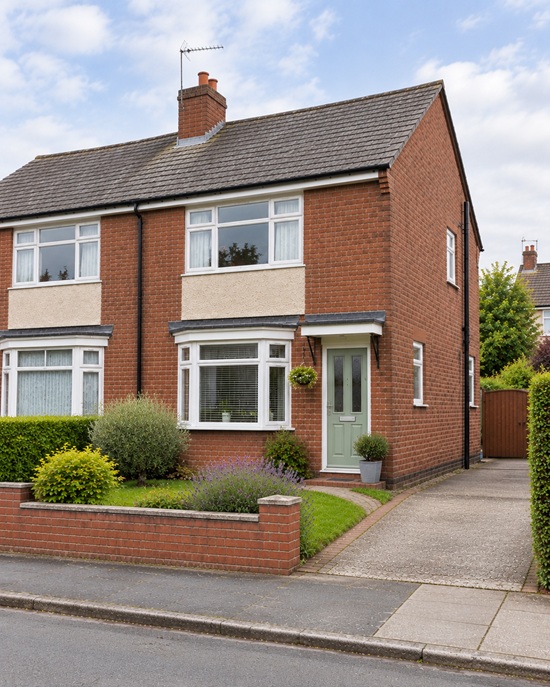
Find UK Property sources, renovates, lets and manages residential houses in Northern England. Its current range includes eight categories of two and three-bedroom houses, generally offered as Freehold ownership or equivalent and Flexi-Furnished for tenants.
A structured, managed proposition
The company advertises a contractually assured 7% net rent for a minimum of five years, subject to the relevant agreement and property terms.
This is a specific managed property proposition, not the same as the regional gross-yield statistics shown earlier. Gross market yield is a calculation based on average rent and value before costs. The advertised 7% net rent is a contractual product claim. Investors should read the agreement, confirm what the net figure includes and obtain independent legal advice.
Frequently asked questions
Is investment property a good investment?
It can provide income and long-term growth, but suitability depends on price, costs, financing, location, risk tolerance and the investor’s wider finances. It is not automatically suitable simply because national prices have risen over time.
How much money do I need to buy an investment property?
The required capital includes the deposit or purchase price plus tax, legal work, survey costs, finance fees, refurbishment and a reserve for unexpected costs. The total varies materially by property and ownership structure.
What is a good rental yield in the UK?
There is no universal good yield. A higher yield may reflect a lower price, stronger rent or greater risk. Compare figures on the same gross or net basis and investigate demand, costs, condition and resale prospects.
What is the difference between gross and net rental yield?
Gross yield compares annual rent with property value before costs. Net yield deducts the costs specified in the calculation. Always ask exactly what has been deducted.
Can an investment property lose value?
Yes. Property prices can fall, remain below the purchase price or underperform inflation. Local results can differ significantly from national averages.
Is a house better than a flat for investment?
Neither is always better. Houses may offer Freehold ownership and a broad family market. Flats may suit particular locations and budgets but can carry lease restrictions and service charges. The full cash flow and exit market matter.
Do investment properties pay more Stamp Duty?
In England and Northern Ireland, buying an additional residential property usually attracts higher SDLT rates. Scotland and Wales use different transaction taxes. Check the current rules for the property location and buyer.
Can overseas investors buy UK investment property?
Overseas buyers can generally purchase UK property, but financing, tax, identity checks, currency exposure, management and the SDLT non-resident surcharge may require specialist advice.
What should I check before buying?
Verify the price, rental evidence, condition, local demand, legal title, lease terms, all costs, financing, management contract, counterparty and exit plan. Use independent legal and professional advisers.
How long should I hold an investment property?
There is no fixed period. High transaction costs and short-term price uncertainty often make property a long-term investment, but the appropriate holding period depends on objectives, cash flow and market conditions.
Results are created property by property
Investment property can combine rental income with long-term capital growth. Fifty years of national data shows the resilience of the UK market, while the regional comparison shows why price and yield vary sharply by location. Neither replaces due diligence.
Start with a realistic purchase price, evidenced tenant demand, a complete cost model and a plan for management and resale.
Methodology and useful sources
The national analysis uses the calendar-year mean of monthly HM Land Registry average prices for all property types. The regional yield figures use average monthly private rent multiplied by 12 and divided by average terraced-house price. Figures are historical, nominal and not forecasts.
Turn market insight into property ownership
Explore house types, Northern locations and the buying process, or discuss the options for your budget and income objectives.